
Age Calculator: Discover Your Biological Clock & Real Age
Table of Contents
You Won't Believe What This Date of Birth Calculator Reveals About Your Age — and it has nothing to do with the number printed on your passport. Most of us treat our date of birth as a fixed, administrative fact: a field to complete on forms, a reason to receive cards in the post, a figure that ticks upward once per year with mechanical indifference. What we rarely consider is that this single data point, when processed through the right lens, opens a window onto something far more unsettling than a number. It opens a window onto time itself.
The standard date of birth calculator does its arithmetic faithfully. Enter your birth date, receive your age in years, months, and days. Simple, clean, and — as it turns out — profoundly incomplete. Because the calendar measures duration, not condition. It counts the rotations of the Earth without registering what happened on any of them: the sleep you lost, the stress you carried, the choices that were quietly accelerating or decelerating the clock ticking inside your cells.
This article moves beyond the calendar. It examines what your chronological age actually represents, how biological science has revealed the enormous gap that can exist between the date on your birth certificate and the true age of your body, and why the emotional, environmental, and even cosmic dimensions of ageing deserve a place in any honest conversation about what your DOB really means. Along the way, you will encounter the research, the tools, and the frameworks that are reshaping how we understand one of the most fundamental facts about ourselves — the fact of how old we truly are.
The Illusion of the Calendar: Why Your DOB is Only Half the Story
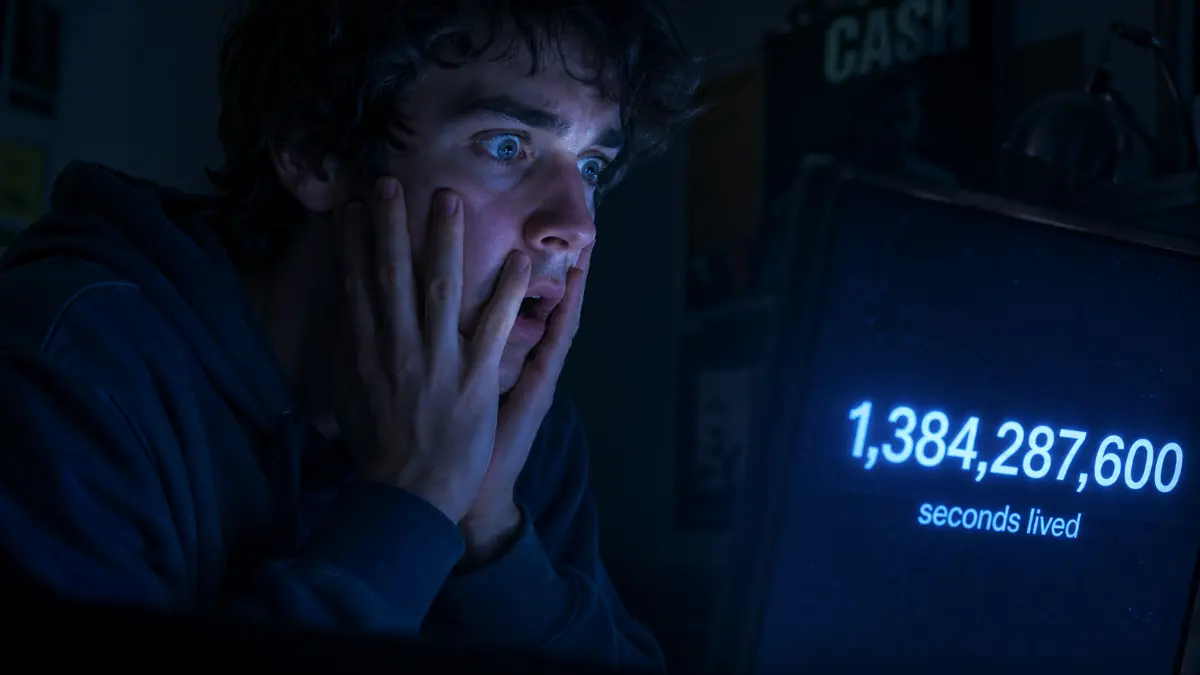
There is something viscerally unsettling about watching a counter tick through your life in real time — years dissolving into months, months into days, days into the very seconds you are reading this sentence. You Won't Believe What This Date of Birth Calculator Reveals About Your Age until you see your existence rendered as 1,384,287,600 seconds and counting. That number lands differently than "44 years old" ever could.
This gut-punch reaction is precisely why interactive age visualisations are spreading across social media at remarkable speed. The 'Found This Calculator' trend has turned a simple DOB input field into a mirror that reflects something uncomfortable: time is not abstract. It is granular, relentless, and deeply personal. When a tool converts your birth date into heartbeats elapsed or hours remaining before your next birthday, the calendar suddenly feels inadequate — because it is.
Chronological age: The total time elapsed since your date of birth, measured in years, months, and days. It tells you when you were born, but nothing about how you have aged.
Standard date of birth calculators perform their arithmetic faithfully. They count the days. What they cannot count is the quality of those days — the sleep, the stress, the choices that determine whether your body is running ahead of or behind the calendar.
Your birth date is a fixed point, but your age is a moving target. Research from Northwestern Medicine confirms that two people sharing an identical birthday can have bodies ageing at dramatically different rates. The calendar captures one dimension of this story.
The next section examines precisely how a rigorous DOB calculator works — and why even the most accurate chronological tools are only the beginning of understanding what your numbers truly mean.
The Math of Time: How to Use a Precise DOB Calculator for Accuracy
Understanding why your calendar age is only part of the picture is one thing — but grasping exactly how that number is calculated reveals surprising complexity. What appears to be simple arithmetic is, in practice, a nuanced process involving leap years, time zones, and calendar conventions that can shift your "exact" age by hours or even days.
What Does a Date of Birth Calculator Actually Do?
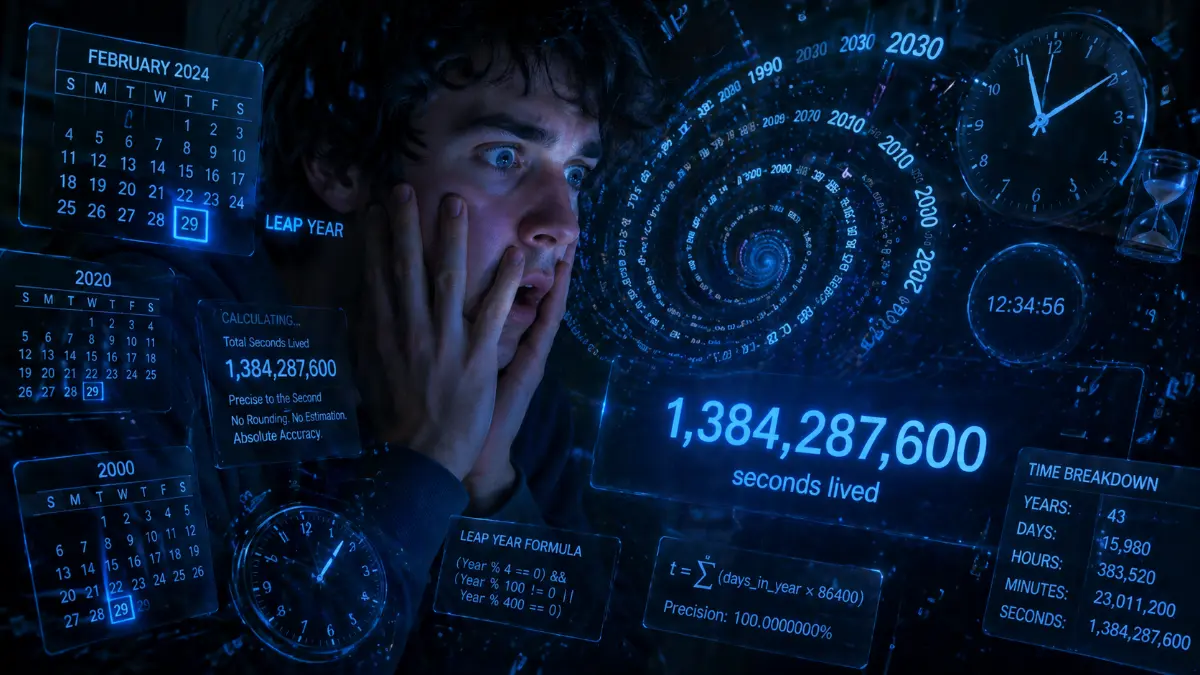
At its core, a date of birth calculator computes the precise interval between your birth date and today's date, breaking it down into years, months, days, hours, and sometimes minutes. Rather than simply subtracting one year from another, an accurate tool accounts for the irregular lengths of calendar months, the addition of 29 February during leap years, and the cumulative effect of those corrections across decades.
Chronological age: The precise measure of time elapsed since birth, calculated to the day — distinct from a rough estimate rounded to the nearest year.
You won't believe what this date of birth calculator reveals about your age until you see the granular detail: most people are surprised to discover they've lived several hundred more days than their "age in years" implies.
Leap Years, Time Zones, and Hidden Precision
Leap years add genuine complexity. Over a 40-year lifespan, roughly ten leap-year corrections apply, collectively contributing nearly a fortnight of "bonus" time that imprecise calculators ignore. Time zones introduce a further subtlety — a person born at 11:45 PM in Sydney may technically be a calendar day "older" than someone born minutes later in London.
Day of Birth and Social Utility
Knowing the day of the week you were born — calculable from your exact DOB — carries more social utility than most people realise. It lets you pinpoint 'birthday closeness' (the nearest weekend to your actual date), plan ahead for milestone celebrations, or mark half-birthdays, which fall exactly 182 or 183 days from your birth date depending on leap years. Many people now generate shareable milestone links using DOB calculators to commemorate these moments with friends and family across social platforms. It is here that the best You Won’t Believe What This Date of Birth Calculator Reveals About Your Age tools distinguish themselves from basic arithmetic converters. Rather than returning a single number, the finest calculators surface the day of the week you arrived in the world, the precise number of weekends you have lived through, and the exact date of your next half-birthday — details that transform a dry administrative figure into something genuinely engaging and shareable. These are charming applications — but they are still measuring chronological time. The more important question, explored next, is how closely that number reflects what is actually happening inside your body at the biological level.
The Biological Gap: Why Genetics Only Tell 20% of Your Age Story
Knowing how your chronological age is calculated — as covered in the previous section — is the starting point. But the more revealing question is: what does that number actually tell you about your body? The answer, increasingly, is "less than you'd think." A standard dob calculator will faithfully return the years, months, and days since your birth date, yet that figure says nothing whatsoever about the condition of the cells producing it.
The 'Genetic Lottery' Myth
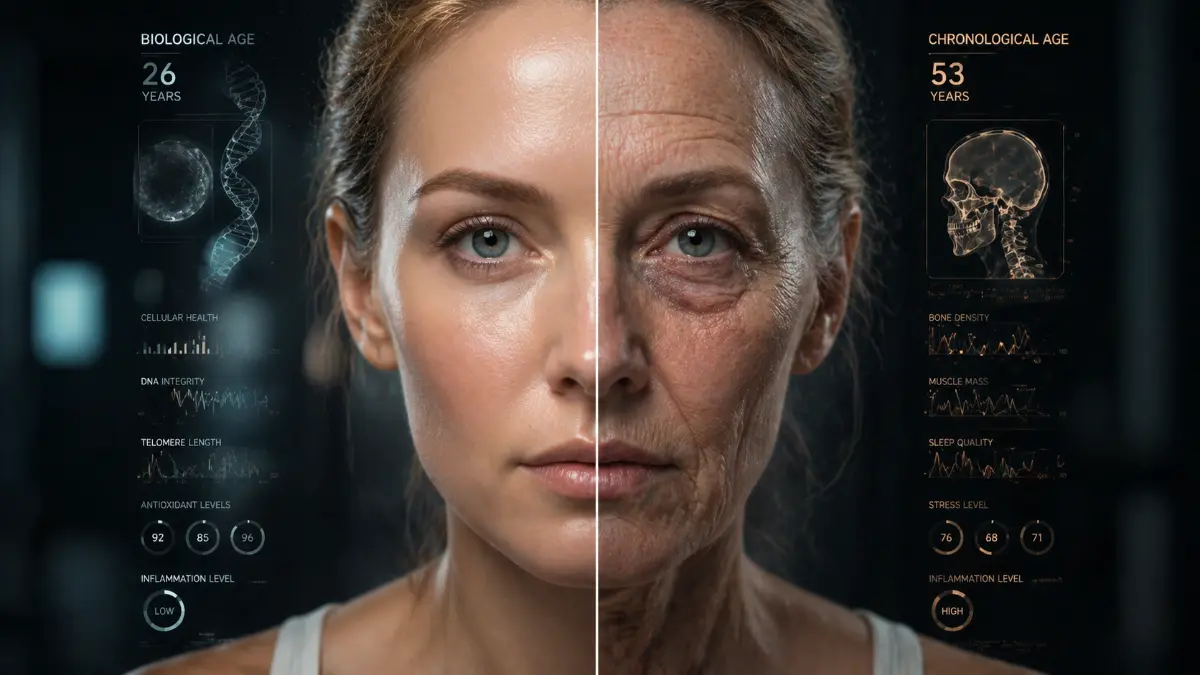
Most people assume that longevity runs in families — that if your parents aged well, you will too. Research tells a more complicated story. According to the Cleveland Clinic, genetics account for roughly 20% of how you age biologically, leaving the remaining 80% shaped by lifestyle, environment, and behaviour. That is a seismic shift in how we should think about ageing — and it fundamentally changes what you are actually measuring when you use a what is my age by date of birth calculator to confirm your chronological age. > Biological age: A measure of how old your cells, tissues, and organs function relative to your chronological age — independent of the date on your birth certificate. Your parents' health history is a reference point, not a sentence. Two siblings, born years apart, following markedly different diets and stress levels, can diverge dramatically in biological age by midlife. The calendar date that a standard calculator returns is identical for both — yet the biological reality inside each of them may differ by a decade or more. Chronological age counts the years; it cannot count what happened inside them.
What AI and Biomarkers Are Revealing
Modern science has moved well beyond birthday candles as a measure of health. AI-enabled electrocardiograms (EKGs) can now estimate a person's biological age from heart rhythm patterns, sometimes detecting discrepancies of a decade or more versus chronological age. Blood biomarkers — including inflammatory markers such as C-reactive protein, telomere length, and glucose regulation — paint a detailed internal portrait of your body's true clock. Fountain Life's biological age research highlights how these tools give individuals an actionable snapshot of where their body actually sits — information that simply wasn't available to previous generations. The best You Won’t Believe What This Date of Birth Calculator Reveals About Your Age tools have evolved far beyond novelty, advancing into genuine clinical utility and offering measurable, reproducible data points rather than rough estimates drawn from family history alone. Where previous generations relied on a GP's intuition and a handful of standard blood tests, today's AI-driven platforms can cross-reference dozens of biomarkers simultaneously, surfacing patterns that no single measurement would reveal in isolation.
The 10-Year Gap: Same Birthday, Different Bodies
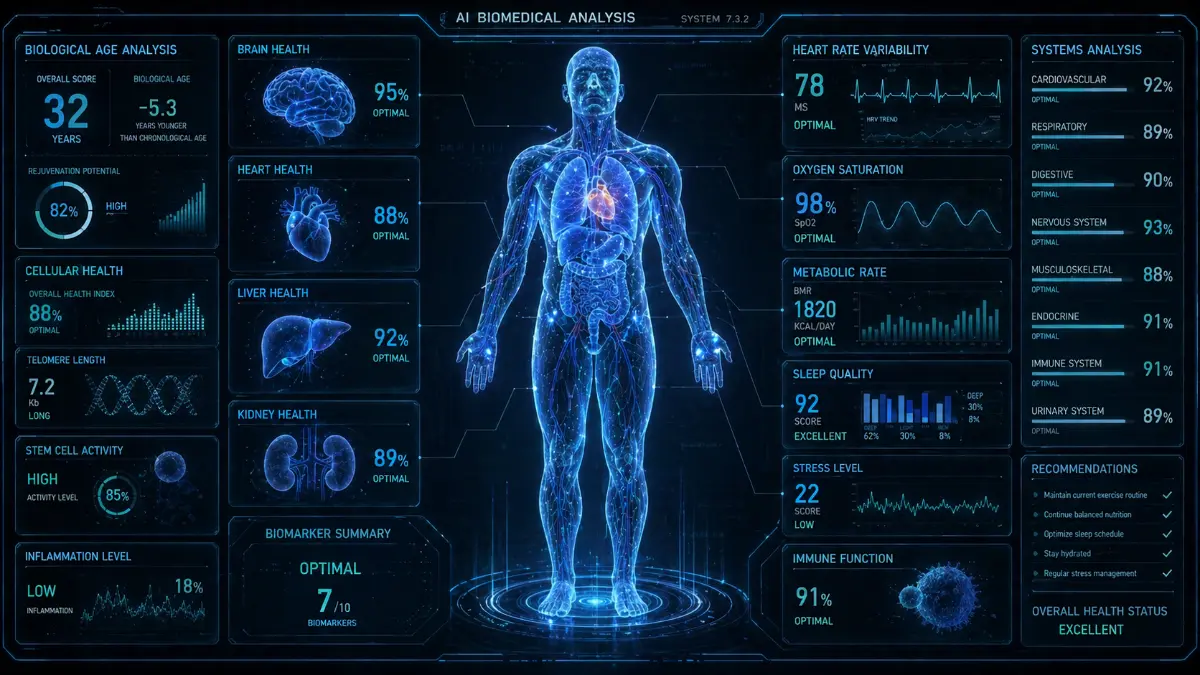
Consider two people born on the same day — 15/06/1980. One exercises regularly, sleeps seven to eight hours nightly, eats a balanced diet, and manages stress. The other is sedentary, sleeps poorly, and smokes. According to Function Health's biological age guidance, lifestyle factors like these can create a biological age difference of up to ten years between individuals of identical chronological age.
The lifestyle variables with the greatest measurable impact include:
- Sleep quality — poor sleep accelerates cellular ageing
- Chronic inflammation — driven by diet, inactivity, and stress
- Exercise consistency — even moderate movement meaningfully slows biological decline
- Smoking and alcohol — among the most aggressive accelerants of biological ageing
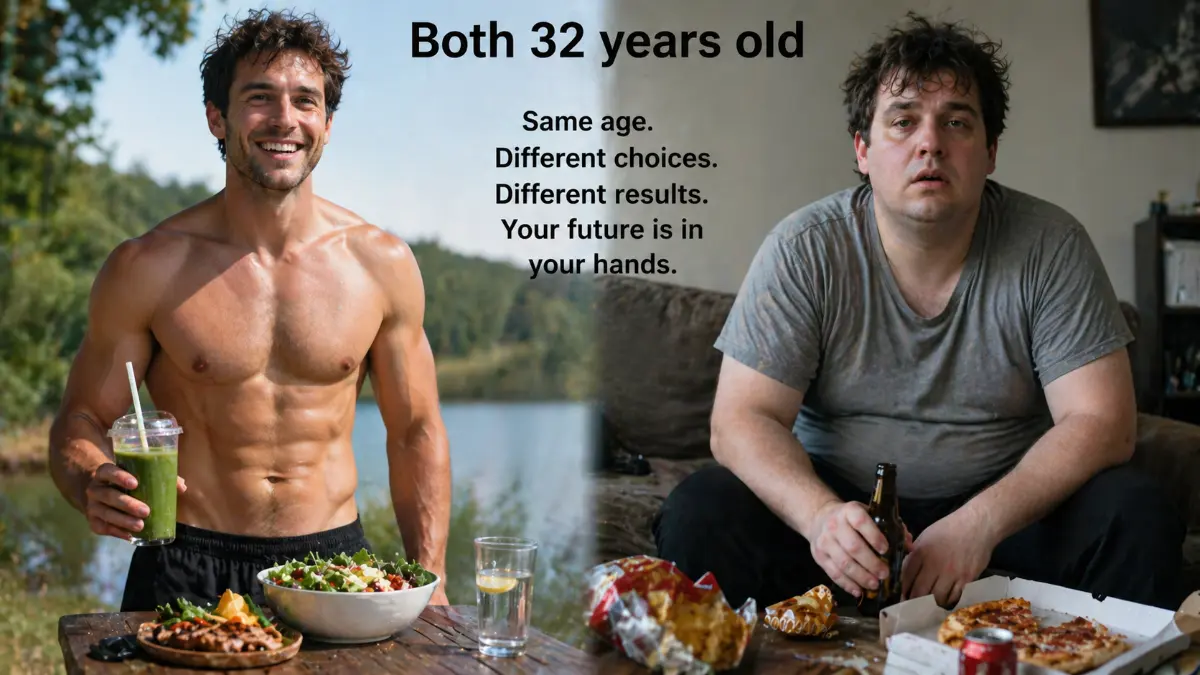
The biology doesn't lie. And it's not just physical habits widening that gap — as the next section explores, your emotional landscape may be quietly writing entries into your biological calendar too.
The Mind-Body Clock: How Emotions Accelerate Your Internal Calendar
Once you've established your chronological baseline — whether through a dob calculator or a standard age reckoning — a more unsettling question emerges: can how you feel actually change how fast you age? The science says yes, and the mechanisms are measurable at a cellular level.
Loneliness: The Silent Accelerant
Cellular senescence refers to the process by which cells permanently stop dividing, accumulating in tissue and driving inflammation — a key hallmark of biological ageing. Research has consistently linked chronic loneliness to accelerated telomere shortening, the very marker that biological age clocks use to assess cellular wear. Loneliness doesn't just feel isolating; it rewires your body's stress-response systems, keeping cortisol elevated and inflammation chronically high.
Psychosocial ageing: The measurable biological acceleration caused by persistent emotional stressors, including loneliness, low mood, and chronic anxiety — distinct from lifestyle factors such as diet or exercise.

How Your Mood 'Writes' Your Age
Emerging deep-learning ageing clocks — sophisticated AI models trained on biomarker data — are now detecting mood-linked signatures in blood panels, facial imaging, and even gait patterns. What's striking is that emotional states leave a consistent biological fingerprint. Individuals reporting persistent low mood show accelerated epigenetic changes compared to emotionally resilient peers of the same chronological age.
The cost of unhappiness is not abstract. Studies suggest that sustained unhappiness carries roughly a 1.65-year penalty on healthy lifespan — a figure that rivals the impact of moderate obesity. Put plainly: your emotional life is as much a health metric as your cholesterol reading.
Feeling Young at Heart Is a Biological Defence
The phrase "young at heart" turns out to be more than sentiment. Research from Northwestern Medicine confirms that subjective age — how old you feel — correlates meaningfully with objective biological markers. Individuals who report feeling younger than their years tend to maintain stronger immune function, lower inflammatory markers, and better cognitive resilience.
Optimism, purpose, and social connection actively slow the machinery of cellular ageing. They're not personality perks — they're biological levers.
Interestingly, the concept of age as a flexible, context-dependent measure extends far beyond the emotional realm. As the next section explores, even the planet you stand on would change your age entirely.
Cosmic Relativity: Your Age Across the Solar System
Your chronological age — the figure any what is my age by date of birth calculator returns — is anchored to Earth's 365.25-day orbit around the Sun. But that number is far less fixed than it appears. Change your reference planet, and your entire life story transforms.
Orbital Age: The number of complete revolutions a planet makes around the Sun during your lifetime, used to calculate how "old" you would be if measured by that planet's year rather than Earth's.
The Mercury vs. Jupiter Problem
This is where planetary science makes the concept of "age" genuinely vertiginous. Mercury completes its solar orbit in just 88 Earth days. A 30-year-old born on Earth would be approximately 124 years old in Mercury years — a centenarian by any cosmic measure. Jupiter, by contrast, takes nearly 12 Earth years to complete a single orbit. That same 30-year-old would be barely 2.5 years old in Jovian terms — barely past the toddler stage.
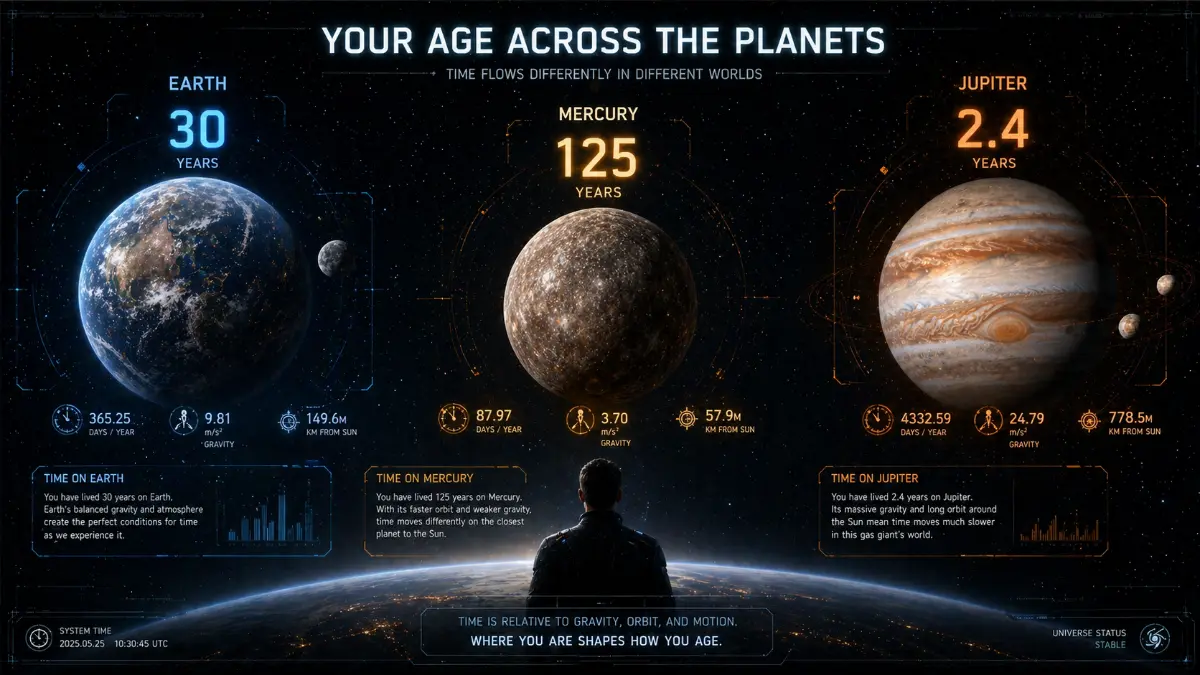
The contrast is striking: the same human lifespan simultaneously reads as ancient and barely begun, depending solely on which world does the counting.
How Orbital Thinking Reframes 'Years'
A year is not a universal constant. It is simply one planet's travel time around one star. When you strip away the Earth-centric assumption, "age" becomes a unit of measurement that requires a reference point — much like metres or miles need a defined standard.
This perspective reinforces what the previous sections have explored: chronological figures, whether tied to Earth or Mercury, are frameworks rather than truths.
The 'Space Age' Calculator — A Viral Reframe
Space age tools — which convert your Earth birthdate into planetary equivalents — have become one of the most widely shared interactive formats online. You Won’t Believe What This Date of Birth Calculator Reveals About Your Age tools have evolved far beyond simple arithmetic, and the planetary reframe is a striking example of that evolution. Discovering that you are 56 years old on Saturn, or a breathless 394 on Mercury, makes abstract science feel startlingly personal. It reframes your sense of time far more memorably than any standard age calculation could manage. These tools function brilliantly as conversation-starters — the kind of result you screenshot and send to a friend without a second thought. But they also carry a genuine insight beneath the novelty: the number attached to your life is a product of convention, not cosmic law. Earth's orbital period is arbitrary from the universe's perspective. We chose it as our unit of measurement because it is the one we inhabit, not because it is the most meaningful measure of a human life. Understanding that is the first step toward choosing better tools to measure what actually matters — tools that go beyond counting orbits and begin to interrogate the quality of the time contained within them. Speaking of better tools, the next section examines exactly what separates a genuinely useful DOB calculator from a basic date counter, and which features are worth seeking out in 2025.
Choosing the Best DOB Calculator Tools for 2025
Not all date of birth calculators are created equal. As we've explored throughout this article — from emotional ageing to planetary time scales — your chronological age is only one layer of a far richer picture. The tools you choose to explore it should reflect that complexity.
What Separates a Good DOB Calculator from a Great One
The strongest tools in 2025 share three core qualities:
- Accuracy: Precise day-by-day calculations accounting for leap years and varying month lengths
- Intuitive UI: Clean, mobile-responsive design that delivers results without unnecessary friction
- Bonus data: Contextual insights such as day of the week you were born, upcoming milestone birthdays, or even your age expressed in hours and minutes
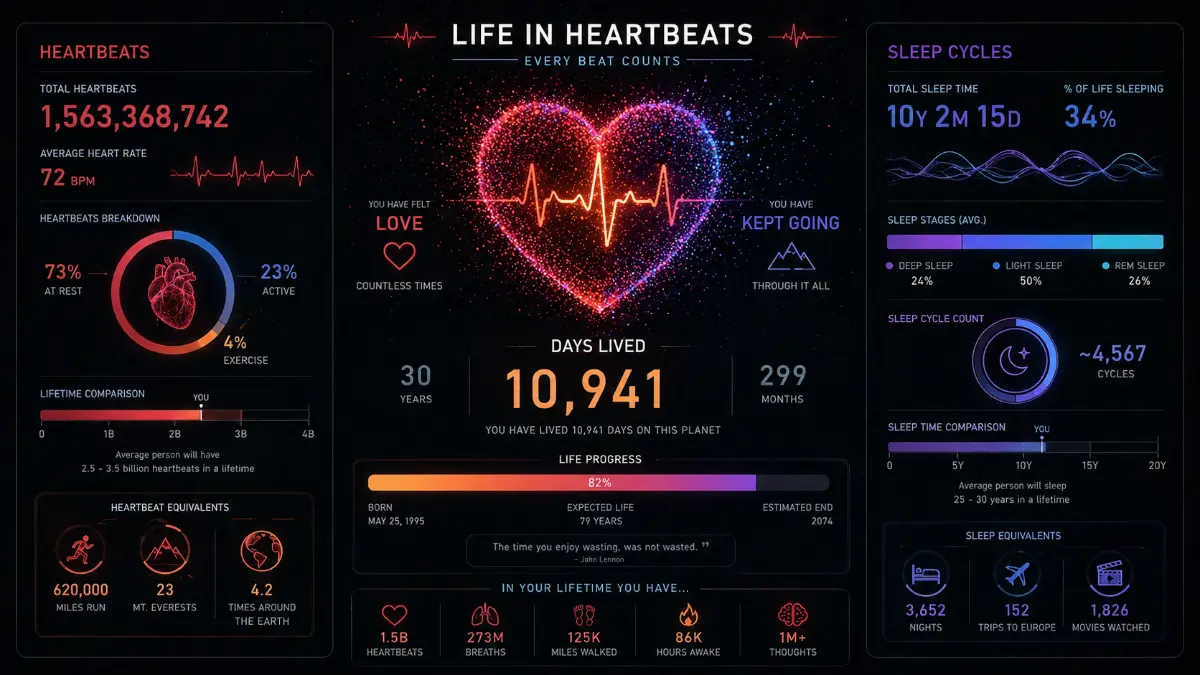
This last category is increasingly where tools differentiate themselves. A calculator that tells you you've lived approximately 14,600 days creates a far more visceral sense of time than a plain "40 years" result.
Interactive Visualisations: The New Standard
Age visualisation: A feature that translates chronological data into engaging formats — such as heartbeats elapsed, nights slept, or seasons experienced — making abstract numbers personally meaningful.
What typically happens with richer tools is that users engage significantly longer and return more frequently. Gamified "guess your age" features and animated milestone timelines are rapidly becoming expected, not exceptional.
Mobile vs. Web and Privacy Considerations
For tracking chronological milestones on the go, mobile-optimised calculators offer convenience — but always check whether the tool stores your birth date beyond the session. Data minimisation is the gold standard: the best tools process your date of birth locally or discard it immediately, never linking it to identifiable profiles.
As Cleveland Clinic research highlights, biological and chronological data together paint a sensitive health portrait — reason enough to treat your date of birth with the same caution as any personal health information.
Still have questions about specific calculations or unusual scenarios? The next section addresses the most common queries readers raise.
Frequently Asked Questions About Age Calculation
Is 12/12/12 a rare birthday? Yes — 12 December 2012 was a once-in-a-century calendar quirk. However, any date's rarity depends on statistical birth distribution rather than numerical novelty.
How can I know my exact age without a birth certificate? In practice, school records, medical files, passport applications, and family registers all serve as credible alternatives for calculating age from date of birth.
Can I calculate my age in dog years accurately? The old "multiply by seven" rule is outdated. Veterinary researchers now use a logarithmic scale — a one-year-old dog is biologically closer to a 30-year-old human, according to biological age research principles.
Chronological age is simply a count of elapsed time — but as this article has explored, it rarely tells the complete story of how your body is truly ageing.
Your date of birth calculator is the starting point, not the destination. Use it to spark deeper questions about your biological clock, then take action.
Key You Won’t Believe What This Date Of Birth Calculator Reveals About Your Age Takeaways
A what is my age by date of birth calculator does far more than return a single number — it reveals chronological age in years, months, days, and even seconds, exposing the true granularity of time elapsed since birth. Your chronological age and your biological age can diverge by a decade or more, with genetics accounting for only roughly 20% of how you age — lifestyle, sleep, stress, and environment shape the rest. Leap years, time zones, and calendar conventions mean that even the arithmetic of age is more complex than most people assume; precise DOB tools account for all of these variables. Emotional and psychological factors — including chronic loneliness and persistent stress — measurably accelerate cellular ageing, making your internal clock as much a product of your mental life as your physical habits. Viewed through a cosmic lens, your age is entirely relative: the same lifespan produces wildly different 'year counts' depending on which planet's orbital period you apply. The best what is my age by date of birth calculator tools for 2025 go beyond basic arithmetic, offering interactive visualisations, biological age insights, and shareable milestone data that transform a dry administrative figure into a genuinely revealing portrait of time.
Related articles
Keep reading similar topics
Precise Age Calculator: Calculate Chronological Age Instantly
Need an accurate age calculation? Use our professional age calculator to determine your precise chronological age for legal, personal, and official milestones.
Age Calculator Verify Your DOB & Birth Date Instantly
Need to confirm your exact age? Use our reliable DOB calculator for instant, accurate results. Perfect for age verification, numerology, and birth chart math.
Precise Age Calculator: Calculate Age by Years, Months, Days
Need an exact age calculation? Use our professional age calculator to determine chronological age in years, months, and days for legal and clinical accuracy.